Source Corrosion Resistant Disinfectant Shoes Mat for Hotel, Hospital, Entrance
Compare 30 listings for corrosion resistant disinfectant shoes mat suitable for hotel, hospital, and entrance applications. Buyers can evaluate specifications, pricing, and customization options from verified suppliers in China.
Key considerations
Products List




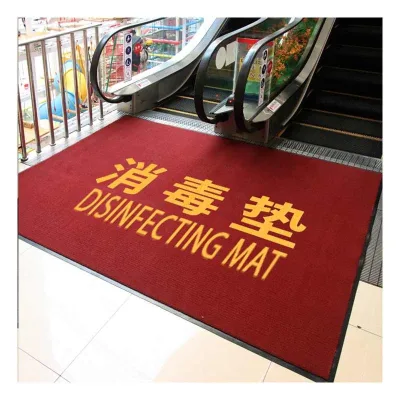
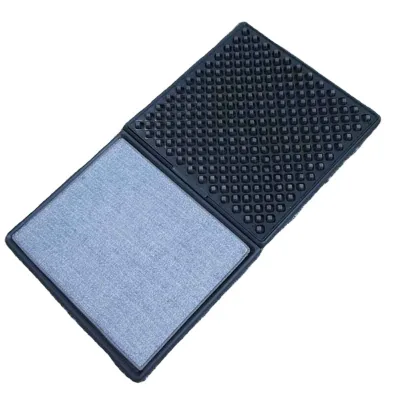
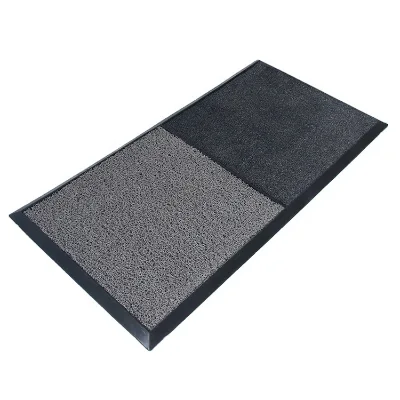
Comprehensive Sourcing Guide
Strategic Sourcing Guide for Corrosion Resistant Disinfectant Shoes Mats
Understanding Material Composition and Functional Performance
When sourcing a corrosion-resistant disinfectant shoes mat, the primary focus must be on the material composition that enables the product to withstand harsh chemical environments while maintaining structural integrity. Based on available market data, the core material for these industrial-grade mats is predominantly natural rubber or synthetic rubber. Natural rubber offers excellent elasticity and durability, while synthetic rubber variants are often selected for their specific resistance to oils and chemicals. The product form is typically described as a pure gum rubber sheet or fabric, which serves as the foundation for the mat's performance characteristics.
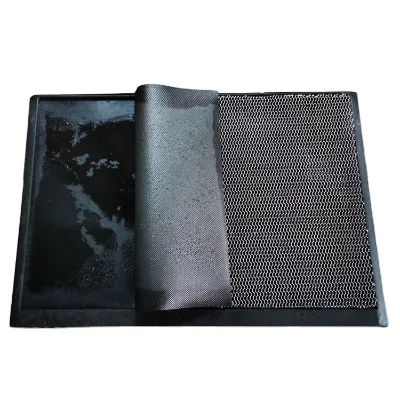
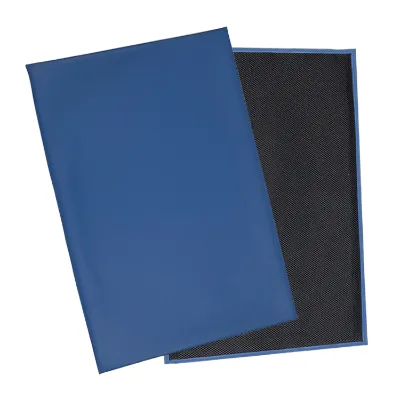
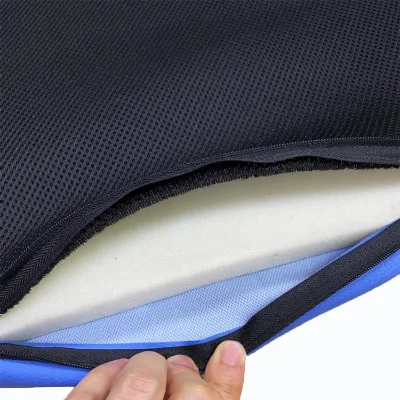
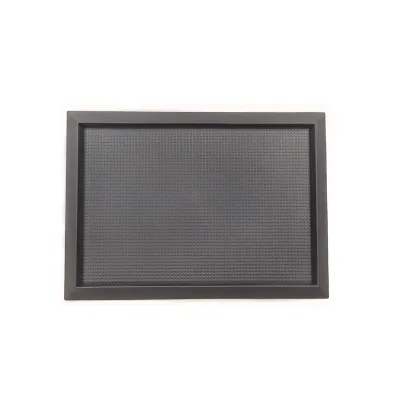
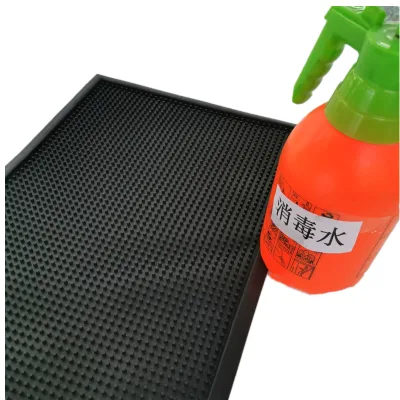
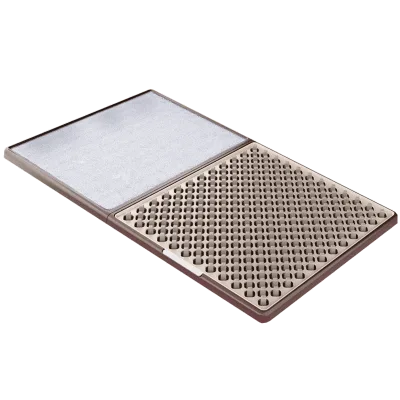
The functional design of these mats often incorporates specific features to address the dual requirements of disinfection and corrosion resistance. Key performance attributes observed in the market include oil-resisting capabilities, heat resistance, and cold resistance, which are critical for facilities operating in varying environmental conditions. The mats are frequently engineered with an anti-slip backing, often featuring a ribbed pattern or rubber fingers, to ensure safety in wet or contaminated zones. Some specialized models, such as sanitizing footbath mats, are explicitly designed with a function for disinfection and anti-bacterial properties, making them suitable for hospital entrances, commercial facilities, and industrial zones where hygiene is paramount.
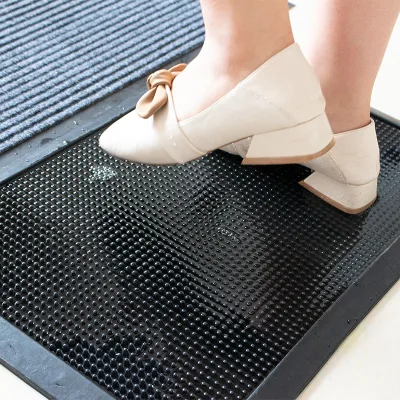
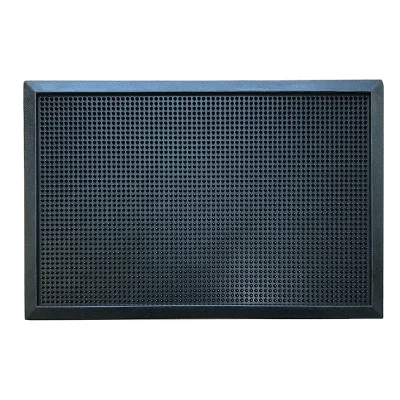
The visual and physical characteristics of these mats vary, with black being the most common color due to its ability to conceal dirt and wear, though options in red, green, blue, and grey are available for color-coding safety zones. The surface pattern is a critical differentiator; options include pressed patterns, plain designs, or distinct rubber finger patterns that mechanically scrape mud and sand from footwear. This mechanical action is often cited as a main advantage, working in tandem with chemical resistance to maintain a clean floor surface. The mats are generally classified as industrial rubber slabs or floor coverings, designed for high-traffic areas such as doorways, bathrooms, and outdoor entry points.
Technical Specifications and Standard Compliance
Defining the technical specifications is essential for ensuring that the procured mats meet the specific operational needs of a facility. The dimensions of these mats are not uniform across the market; buyers must verify the exact size requirements for their application. Standard sizes observed in the supply chain include 45x75cm and 61x91cm, which are suitable for various entryway configurations. Additionally, specific product models, such as the "Best-R001" or "SD01," may have unique packaging dimensions, such as a single package size of 20x20x81 cm, which impacts logistics planning and storage requirements.
Compliance and certification checks are a vital component of the sourcing process, particularly for mats intended for use in healthcare or food processing environments. While specific certification names are not universally listed for all products, buyers should verify that the materials used meet relevant industry standards for hygiene and safety. The "Eco Friendly" attribute is a common claim for certain rubber mats, suggesting that the manufacturing process or material composition adheres to environmental regulations, which is increasingly important for corporate sustainability goals.
For disinfectant-specific applications, the mat must be compatible with the cleaning agents used in the facility. The "Oil-Resisting" and "Corrosion-resistant" features indicate that the rubber compound is formulated to resist degradation from common industrial solvents and disinfectants. However, buyers should not assume that every listed product satisfies all performance claims without verification. It is crucial to request technical data sheets that confirm the chemical resistance profile of the specific rubber compound. The installation location is typically the floor, and the product is often designed as a carpet-like structure with a non-slip backing to prevent shifting during use.
Cost Drivers and Pricing Dynamics
The cost of sourcing corrosion-resistant disinfectant shoes mats is influenced by several variables, including material quality, customization options, and order volume. The observed price range in the market spans from approximately $1.64 to $24.68 USD per unit. This significant variance suggests that price is heavily dependent on the specific model, thickness, and feature set of the mat. Basic models with standard dimensions and plain patterns will likely fall at the lower end of the spectrum, while specialized sanitizing mats with advanced anti-bacterial features or custom branding will command higher prices.
Minimum Order Quantity (MOQ) is another critical cost driver. The market exhibits a wide range of MOQs, from as low as 1 unit to as high as 1000 units. Some suppliers may offer flexible terms with an MOQ of 2 sets for smaller buyers, while others require a commitment of 500 pieces to unlock standard pricing. Buyers must balance their inventory needs against the MOQ requirements to avoid overstocking or incurring unnecessary per-unit costs. Customization is available for many products, which can further influence the final price. Custom orders may involve additional setup fees or higher unit costs due to the specialized nature of the production run.
Packing and logistics also contribute to the total cost of ownership. Products are typically shipped on wooden pallets or in carton boxes, with specific packaging dimensions that affect container utilization. The loading port is often Qingdao, China, which is a major hub for rubber product exports. Buyers should factor in freight costs and potential tariffs when calculating the landed cost. Payment terms such as TT (Telegraphic Transfer) or LC (Letter of Credit) are standard, and the choice of payment method can impact cash flow and negotiation leverage.
Typical Applications and Usage Scenarios
The versatility of corrosion-resistant disinfectant shoes mats makes them suitable for a diverse range of applications across multiple industries. In the industrial sector, these mats are commonly used as industrial rubber slabs or floor coverings in factories where exposure to oils, chemicals, and heavy machinery is frequent. The wear-resistant and impact-resistant properties ensure longevity in these demanding environments. For commercial and hospitality venues, such as hotels and restaurants, the mats serve as entrance solutions that maintain cleanliness and safety. The anti-slip and non-slip features are particularly valuable in areas prone to wet conditions, such as near bathrooms or outdoor entryways.
Healthcare facilities represent another critical application area. Mats with disinfectant and anti-bacterial functions are essential for hospital entrances to prevent the spread of pathogens. The "sanitizing footbath" design is specifically tailored for this purpose, allowing for the cleaning of footwear before entering sterile zones. The ability to scrape mud and sand, combined with chemical resistance, makes these mats ideal for maintaining hygiene standards in high-traffic medical areas. Additionally, the mats are used in residential settings, such as home entrances and bathrooms, where durability and ease of cleaning are desired.
Outdoor applications also benefit from the weather-resistant properties of these mats. Models designed for outdoor use can withstand exposure to rain, UV radiation, and temperature fluctuations without degrading. The cold-resistant and heat-resistant attributes ensure that the mats remain functional in extreme weather conditions. In commercial spaces like bars, golf courses, and exercise facilities, the mats provide a safe and clean surface for patrons. The modern design aesthetic allows these functional products to blend seamlessly with the interior or exterior decor of various establishments.
Supplier Evaluation and Sourcing Strategy
Evaluating suppliers for corrosion-resistant disinfectant shoes mats requires a rigorous approach to ensure reliability and product quality. Buyers should prioritize suppliers who demonstrate transparency regarding their manufacturing capabilities and material sourcing. The origin of the products is predominantly China, with specific ports like Qingdao serving as key loading points. While the location is known, buyers should verify the specific factory capabilities and quality control processes of the supplier.
Customization availability is a key differentiator among suppliers. The market data indicates that customization is available, allowing buyers to tailor the mats to their specific branding or functional needs. Suppliers who offer flexible customization options are often better positioned to meet unique procurement requirements. However, buyers must be cautious of suppliers who make unverified claims about performance or certifications. It is essential to request evidence of quality control measures and to review sample products before committing to a large order.
Lead time is another critical factor in supplier evaluation. The observed lead time for these products ranges from 35 to 40 days, which is a standard timeframe for rubber mat manufacturing and shipping. Buyers should factor this duration into their procurement planning to avoid stockouts. Suppliers who can consistently meet this lead time while maintaining quality are preferable. Additionally, the payment terms, such as TT or LC, should be clear and agreeable to both parties. A supplier with a reputation for reliable communication and adherence to agreed terms is a valuable partner in the long term.
Quality Control and Long-Term Procurement Considerations
Implementing a robust quality control (QC) protocol is essential for ensuring that the procured mats meet the required standards. Buyers should establish clear acceptance criteria based on the observed product attributes, such as material composition, dimensions, and performance features. Regular inspections during the production process can help identify and rectify any issues before the goods are shipped. For disinfectant mats, verifying the anti-bacterial properties and chemical resistance is crucial. This may involve requesting third-party test reports or conducting in-house testing upon receipt of the samples.
Long-term procurement considerations involve building a sustainable relationship with suppliers who can consistently deliver high-quality products. The availability of spare parts or replacement mats should be considered, especially for critical applications in healthcare or industrial settings. The eco-friendly attribute of some mats suggests that sustainability is a growing concern in the market, and buyers should look for suppliers who prioritize environmentally responsible manufacturing practices.
The durability of the mats is a key long-term factor. Features such as wear-resistance, corrosion-resistance, and impact-resistance ensure that the mats remain functional over an extended period, reducing the frequency of replacement and lowering total cost of ownership. Buyers should also consider the ease of maintenance; mats that are easy to clean and disinfect will require less downtime and labor. Finally, the packaging and shipping conditions should be monitored to prevent damage during transit, ensuring that the mats arrive in perfect condition and ready for immediate installation.
Comparative Analysis of Product Models
To assist buyers in making informed decisions, the following table compares key attributes of different product models observed in the market. This comparison highlights the variations in specifications, usage, and features that may influence the final selection.
| Product Model | Primary Material | Key Features | Typical Application | MOQ |
|---|---|---|---|---|
| Sanitizer Mat | Natural/Synthetic Rubber | Anti-Slip, Disinfectant, Oil-Resisting | Hospital, Hotel, Entrance | 500 PCS |
| Foot-Bath Mat | Rubber | Scrape Mud, Anti-Bacterial, Non-Slip | Entrance, Bath, Commercial | 2 Sets |
| Door Mat (SD01/SD02) | Pure Gum Rubber | Wear-Resistant, Heat/Cold Resistant | Outdoor, Home, Industrial | 1-1000 |
| Best-R001/R002 | Rubber | Modern Design, Eco Friendly | Hotel, Home, Bath | Variable |
| Best-101 | Rubber | Plain Pattern, Non-Slip Backing | Outdoor, Exercise, Bar | Variable |
This comparison underscores the importance of matching the specific product model to the intended application. While all models share common rubber-based construction, the specific features and performance characteristics vary significantly. Buyers should carefully review the technical specifications of each model to ensure alignment with their operational requirements.
FAQs
What materials are used for corrosion resistant disinfectant shoes mats?
These mats are primarily made from natural rubber or synthetic rubber compounds. The core material often appears as a pure gum rubber sheet or fabric designed to withstand harsh chemical environments while maintaining structural integrity for industrial and commercial use.
How do these mats function for disinfection and anti-bacterial purposes?
Specialized models like sanitizing footbath mats are explicitly designed with functions for disinfection and anti-bacterial properties. They often feature rubber fingers or ribbed patterns to mechanically scrape mud and sand while preventing pathogen spread in hospital and commercial entrances.
Which standard sizes are available for industrial rubber floor coverings?
Standard dimensions observed in the supply chain include 45x75cm and 61x91cm for various entryway configurations. Specific product models may also have unique packaging dimensions, such as a single package size of 20x20x81 cm, which impacts logistics planning.
Can buyers customize the mats for specific branding or functional needs?
Yes, customization is available for many products allowing buyers to tailor the mats to specific branding or functional requirements. Custom orders may involve additional setup fees or higher unit costs due to the specialized nature of the production run compared to standard models.
What is the typical lead time for manufacturing and shipping these mats?
The observed lead time for these products ranges from 35 to 40 days for manufacturing and shipping. Buyers should factor this duration into their procurement planning to avoid stockouts, as this is a standard timeframe for rubber mat production in the region.
How does the minimum order quantity affect the pricing of these mats?
The market exhibits a wide range of MOQs from as low as 1 unit to as high as 1000 units. Some suppliers offer flexible terms with an MOQ of 2 sets for smaller buyers, while others require a commitment of 500 pieces to unlock standard pricing.
Where are these rubber mats typically manufactured and shipped from?
The origin of the products is predominantly China, with specific ports like Qingdao serving as key loading points. Buyers should factor in freight costs and potential tariffs when calculating the landed cost from these major hubs for rubber product exports.